
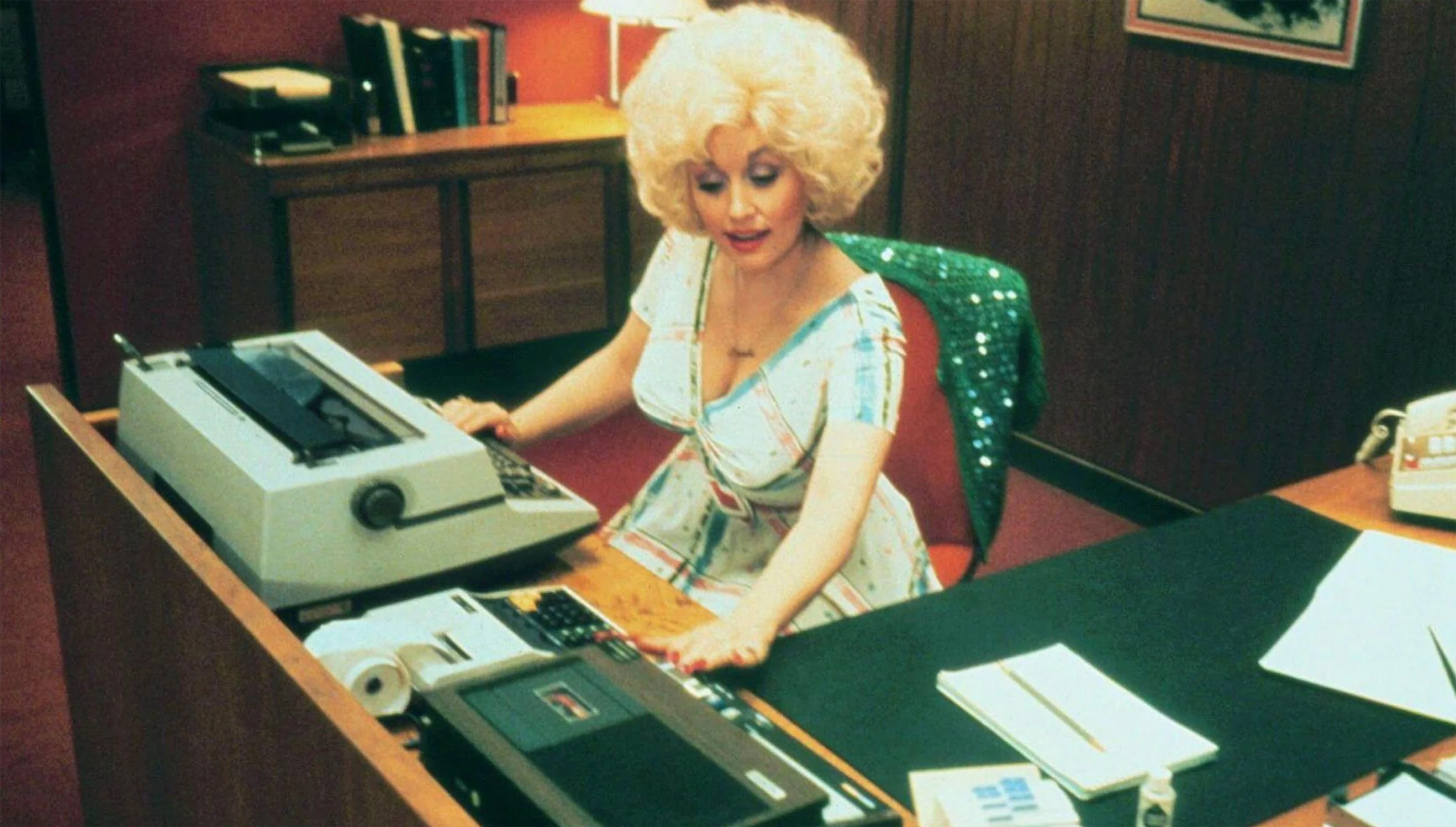
A still image from the movie ‘9 to 5’
Pictorial Press Ltd / Alamy
Working 9 to 5: A TGA Tribute to Dolly Parton
Today, the world is remembering Dolly Parton.
The songs, of course, are everywhere. So are the stories: the rhinestones and big hair, the unmistakable voice, the extraordinary songwriting career and the humor that so often accompanied it. She will be remembered as an optimist, humanitarian, philanthropist, creator and remarkably sharp businesswoman.
But there is also a particular connection to the executive support profession.
In 1980, Dolly Parton helped put the working lives of millions of women office workers into popular culture.
She gave us 9 to 5.
Released in 1980 alongside the film of the same name, 9 to 5 was funny, rebellious and extraordinarily catchy.
But behind the comedy was something very real.
The film was informed by the experiences of women clerical workers at a time when secretarial and administrative work was overwhelmingly performed by women. The 9to5 movement had been established by clerical workers in Boston in 1973, organizing around workplace discrimination, harassment, unequal pay and a lack of respect. The film, starring Parton alongside Jane Fonda and Lily Tomlin, drew on the experiences of women office workers and the movement that was already challenging their treatment at work.
Then Dolly wrote the song.
With its typewriter-like rhythm - famously created with her acrylic fingernails - 9 to 5 captured something about working life that travelled far beyond the United States.
For the secretaries and office workers of the time, there was suddenly a global superstar singing about their world.
Their work. Their frustrations. Their bosses. Their ambitions. And the feeling of contributing considerably more than the recognition they received in return.
For today's executive support profession, that history matters.
The profession has travelled a considerable distance from the office portrayed in 9 to 5. The titles have changed. Technology has transformed the work. Responsibilities have expanded. Executive Assistants today can operate across organizations, borders and time zones, managing complexity that would have been almost unimaginable in 1980.
But those women were part of the profession's history.
And Dolly helped make them visible.
Far more than 9 to 5
Dolly Parton also understood something about visibility.
She built a career in an industry where women had far less power, ownership and control than they do today, and made herself impossible to overlook. The hair, the rhinestones and the larger-than-life image were unmistakably Dolly — but behind them was a prolific creator and sharp businesswoman who understood the value of her work and the importance of owning it.
There is something in that which resonates with the executive support profession.
Much of executive support happens close to someone else's visibility. The contribution can be significant while the person making it remains largely unseen. Building professional visibility without making the work about oneself remains one of the more complex aspects of executive support.
Dolly's circumstances were very different, of course. But there is something worth remembering in the way she claimed space for herself without becoming someone else to occupy it.
She became visible on her own terms.
And then she gave
Her success also gave Dolly the opportunity to give back — and she did so on an extraordinary scale.
Her Imagination Library began in 1995, inspired by her father's inability to read and write, sending books to young children in her home community in Tennessee. It grew into an international program that has put books into the hands of millions of children.
It was one of many expressions of her generosity, and one that will continue long beyond her lifetime.
A little more than 9 to 5
Dolly Parton died this week at 80. There will rightly be much written about her music, her generosity, her business acumen and the extraordinary place she created for herself in popular culture.
For the executive support profession, there is another small piece of that legacy. More than four decades ago, 9 to 5 put the experiences of secretaries and office workers on cinema screens and radios around the world.
The profession has changed enormously since then. But the women whose working lives helped inspire that story remain part of its history.
And Dolly Parton gave them one unforgettable song.