
What 2025 Revealed About Executive Support
By Trish Butera | A founder’s reflection on quiet influence, judgment, and the year that was.
As 2025 comes to a close, I’ve found myself reflecting less on milestones and more on moments - the kind that rarely make it into role descriptions, performance reviews, or leadership conversations.
Moments that only those working in executive and administrative support roles would recognise.
The pause before accepting a meeting request that doesn’t quite make sense.
The decision to reframe a message before it reaches the executive.
The quiet recalibration of a calendar when priorities shift (again) without anyone asking.
These are not ‘headline’ moments but they matter because this is exactly where the real work of executive support lives.
A front-row seat to leadership dynamics
As you may know, my work spans several areas - from intercultural advisory for global organisations, to coaching C-suite leaders on cross-cultural leadership, to career coaching for executive assistants, and to the development and facilitation of executive support masterclasses and learning programs. These programs are delivered digitally and in person where emerging markets benefit from in-country learning. The Global Assistant programs are
What’s important to say is that this work doesn’t sit in isolation. It directly informs the learning design, frameworks and practical tools that sit behind The Global Assistant Online (TGA) and are made accessible to global audiences across APAC, Europe, the US and Canada.
This connection between real-world leadership dynamics and capability development is what has made TGA a trusted platform for executive support professionals seeking genuine depth - not surface-level skills.
This breadth of work provides a front-row seat to workplace and leadership dynamics. And in 2025, a set of patterns became impossible to ignore. I’m not talking about trends pulled from reports but realities experienced daily by those sitting in roles just like yours.
Judgment over volume
What stood out most this year wasn’t how much executive support professionals were doing — it was how much judgment they were applying. Across sessions and programs, EAs spoke about:
managing competing priorities without authority
reading between the lines in emails
absorbing pressure so their leaders could stay focused
Much of this work remains invisible. Yet when speaking with executives, its value was clear. In c-suite coaching conversations, I heard the same sentiment repeated in different ways: For leaders, it’s often their EAs who keep them oriented.
Not because they manage tasks — but because they manage context.
From execution to interpretation
In 2025, executive support continued its shift away from pure execution and toward interpretation.
Interpreting urgency, risk and what genuinely needed a leader’s attention and what didn’t.
This interpretive capability became one of the most relied-upon forms of support, particularly as leaders navigated competing demands, compressed timelines and increasingly complex stakeholder environments.
Trust, tone and cultural intelligence
Trust was another defining thread of the year.
Hybrid work and cross-border collaboration meant tone and timing mattered more than ever. A message sent too quickly or too bluntly could undo weeks of progress.
The executive support professionals who navigated this well weren’t just efficient communicators. They were culturally intelligent ones. They understood how meaning shifts across people, roles and regions and they adjusted accordingly. In many cases, they became the quiet stabilisers of trust inside leadership teams.
AI: from fear to fit
AI remained very much part of the conversation in 2025 but not in the way many expected.
The focus shifted away from fear and towards fit.
Executive support professionals were less concerned about being replaced and more interested in understanding what worked best for their role, their executive, and their way of working.
What stood out was a growing sense of confidence. Leaders leaned on executive support to decide where AI genuinely added value and where human judgment, discretion and relationship awareness mattered more.
The most effective EAs weren’t chasing every new tool. They were choosing intentionally, using technology to support clarity rather than complicate it.
Career growth through sustainability and choice
Across programs and coaching, conversations increasingly turned to sustainability and growth.
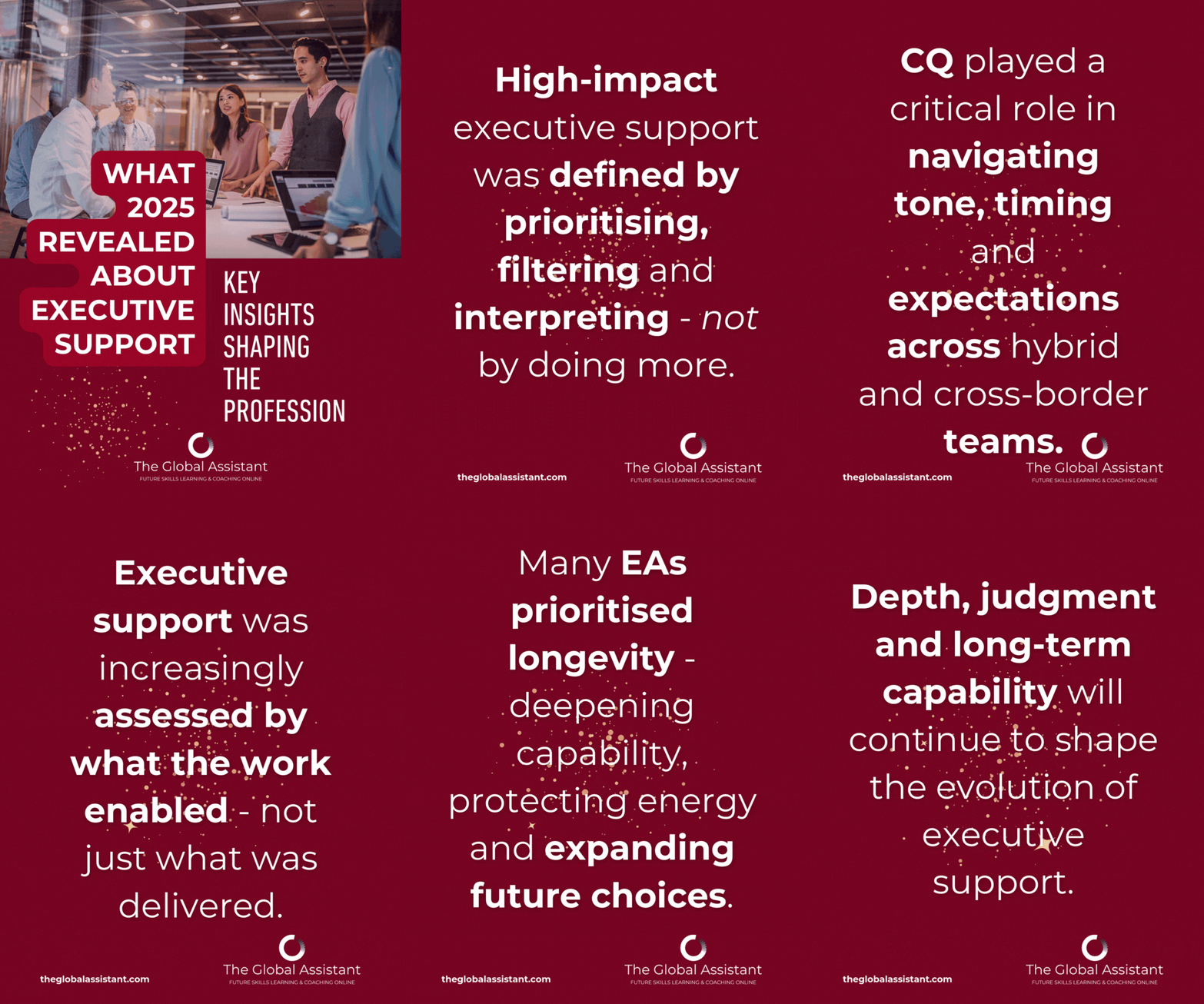
Executive support professionals were thinking less about titles and more about longevity:
how to deepen capability
how to protect energy
how to expand options without stepping away from the work they love and do best
This shift opens up meaningful career pathways for 2026 — particularly for those who understand how influence, judgment and discretion shape leadership outcomes over time.
What 2025 made clear
Looking back, these are the lessons 2025 made clear for the executive support profession:
Judgment outweighed task volume
Context management became core work
Cultural intelligence protected trust
Impact replaced activity as a measure of value
AI amplified judgment rather than replacing it
Career growth centred on sustainability, options and longevity
A note of thanks
To the executive assistants and administrative professionals who invested in their development this year through learning, reflection and capability building - thank you. Your professionalism and insight continue to shape this profession.
I also want to acknowledge the leaders and organisations who actively supported the ongoing development of their executive support and administrative teams. When organisations invest in this work, they strengthen not just individual capability, but the entire leadership system around it.
As we move into 2026, executive support remains a professional discipline underpinning leadership effectiveness. Often operating quietly, its influence is defining and the strength of leadership will increasingly reflect the strength of its support..
With all good wishes for 2026.
For a practical look at your next development step, read Where to Position Your Executive Support Role for the Future.
Trish Butera
Founder, The Global Assistant Online